
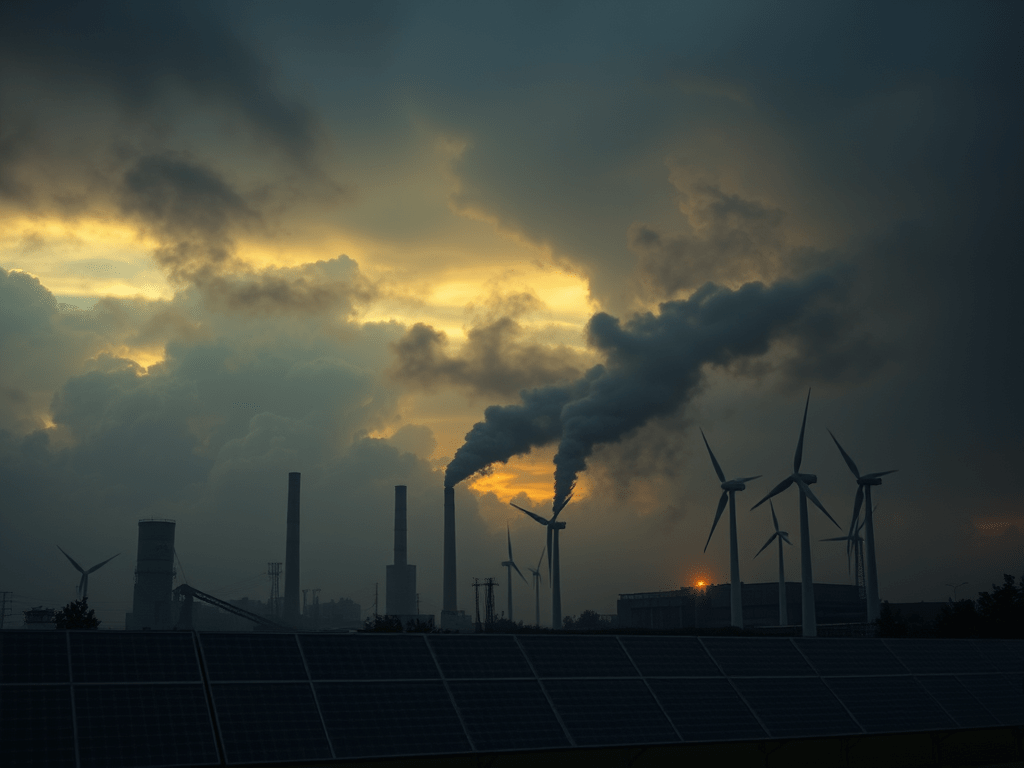
The Liberal National Party’s victory in Queensland marks more than just a change in government – it represents a dangerous pivot backward in Australia’s renewable energy transition.
David Crisafulli’s elevation to Premier threatens to derail nearly a decade of progress toward clean energy, potentially sabotaging not just Queensland’s future but Australia’s climate commitments.
Let’s be clear: Crisafulli’s stance on keeping coal-fired power stations running “indefinitely” is not just environmentally reckless – it’s economically myopic.
Queensland, blessed with abundant sunshine and wind resources, has been positioned to become a renewable energy powerhouse.
The state has nearly quadrupled its renewable generation since 2018, reaching 28% of electricity production.
This momentum now faces a brick wall of regressive policy.
The numbers tell the story.
Queensland’s renewable energy industry has more than 20GW of projects in various stages of development – enough to meet the previous government’s 2035 renewable targets.
These investments, representing billions in economic opportunity and thousands of jobs, now hang in the balance.
Why?
Because investors hate uncertainty, and Crisafulli’s government is serving it up in spades.
The LNP’s refusal to support renewable energy targets while claiming to back emissions reduction goals is a contradiction that would be laughable if it weren’t so dangerous.
How exactly does Crisafulli plan to achieve net zero by 2050 while keeping coal plants burning “indefinitely”?
It’s like promising to start a diet while pledging to eat cake for every meal.
This policy vacuum couldn’t come at a worse time.
As other states race ahead with renewable energy transitions, Queensland risks becoming Australia’s rust belt.
The LNP’s approach ignores the basic economics of energy markets – coal is becoming more expensive while renewable costs continue to plummet.
By clinging to coal, Queensland taxpayers will end up subsidising increasingly uneconomic power plants while missing out on the renewable energy boom.
The implications extend far beyond state borders.
Queensland’s emissions matter nationally – it’s Australia’s highest-emitting state, with electricity generation accounting for over a third of its carbon output.
Crisafulli’s coal-first policy threatens to undermine Australia’s international climate commitments and its credibility on the global stage.
What makes this particularly frustrating is that Queensland was on track.
The previous government’s $69 billion energy and jobs plan had won praise from international climate leaders and positioned Queensland as a potential renewable energy export hub.
This vision is now being traded for the false security of coal dependence.
The consequences won’t just be environmental.
As global markets increasingly demand clean energy and sustainable products, Queensland’s economy risks being left behind.
Major trading partners are already implementing carbon border adjustments.
How will Queensland’s exports compete in this new reality if we’re still burning coal while our competitors embrace renewables?
For all Crisafulli’s talk about reliable power and affordable energy, he’s leading Queensland down a path that will deliver neither.
The real energy security lies in diversified renewable sources backed by storage – not in aging coal plants that become more expensive and unreliable with each passing year.
Queensland voters have made their choice, influenced by various issues beyond energy policy.
But the consequences of this election for Australia’s renewable energy future are undeniable.
The challenge now falls to industry leaders, environmental groups, and engaged citizens to hold the new government accountable and fight to preserve Queensland’s path to a clean energy future.
The stakes are too high to do otherwise.
Visit voltsnext.com for more clean energy news and insights.



 Volt's Next